

AI in AppSec: Friend, Foe, or Both?
Artificial Intelligence has become a powerhouse in modern cybersecurity. It detects threats faster, analyzes more data than any human team, and stays awake 24/7.
But the same AI capabilities used to protect applications are also being used by attackers to automate exploits, generate malware, and bypass security controls.
This raises a critical question: Is AI helping AppSec or hurting it? The answer isn’t simple, because it’s both.
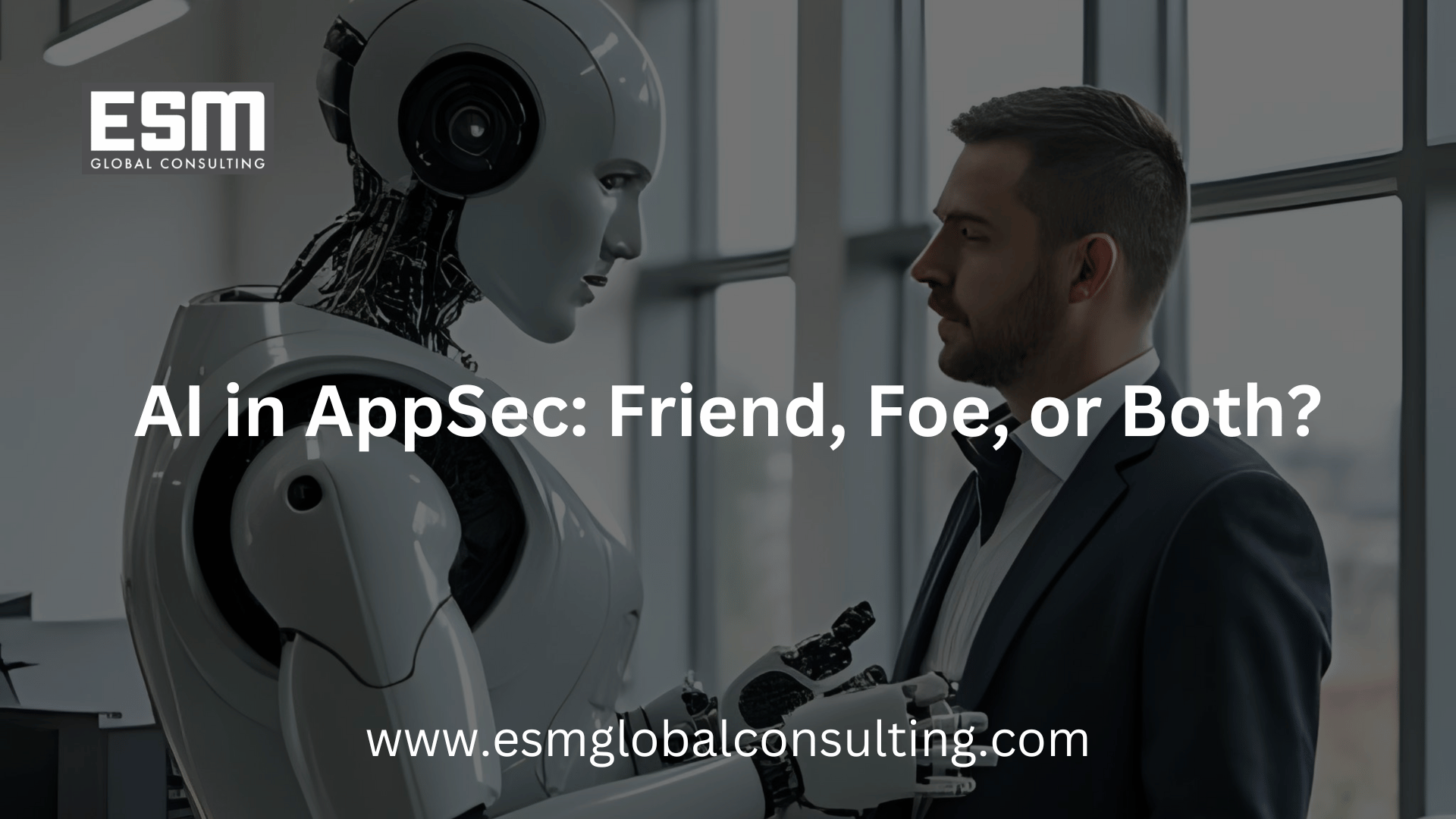
How AI Strengthens Application Security (The Friend)
AI brings massive advantages to AppSec, including:
• Threat Detection at Scale
AI processes billions of signals across APIs, logs, and traffic to detect malicious activity faster than traditional tools.
• Early Detection of Zero-Day Attacks
Machine learning models recognize unusual behavior long before an exploit has an official signature.
• Continuous Learning and Adaptation
AI models evolve with every new dataset, meaning they get better without extra developer or analyst workload.
• Faster Incident Response
AI automates alerts, triage, and even containment for certain threat patterns.
• Reduced False Positives
Better signal-to-noise ratio means security teams can focus on real threats.
AI is, without question, a powerful ally.
How AI Creates New Security Risks (The Foe)
Unfortunately, AI is also empowering attackers.
• AI-Generated Malware
Attackers use AI to create polymorphic malware that constantly changes its structure, making it harder to detect.
• Automated Exploit Development
AI tools can scan apps, identify weaknesses, and build exploits faster than human researchers.
• Deepfake Social Engineering
Sophisticated phishing emails, fake voices, and synthetic identities are becoming seamless.
• Faster Credential Attacks
AI accelerates credential stuffing, password cracking, and targeted brute-force attacks.
• Weaponized LLMs
Large language models can be used to:
Generate malicious scripts
Write exploit code
Mimic developer comments or logs to hide malicious activity
AI levels the playing field, unfortunately for both sides.
The Balance: Why AI + Human Expertise Is the Only Safe Path
AI improves AppSec dramatically, but it can’t operate alone.
Humans provide context.
AI can identify anomalies, but humans interpret business logic, user intent, and real-world impact.
Humans stop hallucinations.
Security AI can still produce inaccurate or incomplete risk assessments.
Humans understand creative attack paths.
Even the most advanced models struggle with multi-step, non-linear exploit chains.
The most secure organizations use a hybrid approach: AI to scale, humans to interpret and act.
The Future of AI in AppSec
AI’s role will only grow, but so will attacker sophistication.
What’s coming next:
AI agents that autonomously secure code in development
AI-driven penetration testing
Real-time exploit prediction engines
AI systems that understand business logic flaws
The organizations that thrive will be those that embrace AI, but do so responsibly.
Conclusion: Friend and Foe, But Manageable
AI isn’t good or bad. It’s powerful.
Used correctly, it strengthens AppSec, accelerates detection, reduces breaches, and protects businesses.
Used maliciously, it creates threats faster than traditional security can handle.
The deciding factor isn’t the AI itself; it’s how it’s implemented, monitored, and governed.
FAQs
Q1: Can AI replace human security analysts?
Not safely. AI augments humans but can’t replace real-world judgment.
Q2: Is AI-generated malware a real threat?
Yes. Attackers already use AI to create evasive, polymorphic malicious code.
Q3: Does AI introduce compliance risks?
If it is poorly implemented, the answer is yes, especially when it comes to audit trails and explainability.
Q4: Is AI-based AppSec expensive?
Not with Managed AppSec; it scales efficiently across applications.
Q5: What’s the safest way to adopt AI in AppSec?
Use AI within a Managed AppSec program where expert teams tune, validate, and govern the models.